FAST-CHAT · AGENT
Rigel
The fast-chat tier and the always-on agent’s brain. Dual RTX 3090, one of them on a custom water loop.
48GBWin 11
Seventeen GPU nodes between a garage and an office, two NAS boxes, a custom water loop, and a 40-gigabit RDMA llama.cpp cluster. Roughly four million tokens of live context across the serving fleet. Local inference, persistent memory, no rented GPUs. This is the build log.
Downloads are Hugging Face rolling 30-day totals across published Robinson Labs models, a public counter I do not control. A merge is agent-authored when the PR body carries the Generated-with-Claude-Code trailer left by the pr-architect flow. Counts cover Robinson Labs own-org repositories only, and every merge is human-reviewed before it lands, so an agent opens the PR but a person makes the call. Numbers refresh at deploy time.
The fast-chat tier and the always-on agent’s brain. Dual RTX 3090, one of them on a custom water loop.
The NVIDIA RPC constellation: six nodes and 16 GPUs on 40G RDMA, pooling about 150 GB of VRAM behind one coordinator.
10× Pascal cards for the embed / rerank fleet, plus the Whisper STT lane.
Active member of the fast-chat pool, serving the custom 35B behind the load balancer. 3× RX 5700 XT on Vulkan. 128K × 3 context.
4× RX 5700 XT on Vulkan. Vision summarizer, Qwen3.6-35B-A3B.
SDXL + Lightning on sd.cpp/Vulkan, four cards driven from Rigel. 4 images per pass, ~20s a pass.
Structured-JSON lane: 2× Qwythos-9B pool, one per card. Clean JSON, clean tool calls.
3× RX 5700 XT on Vulkan. Agent-brain lane serving the AgentWorld-35B quant that won the tau-bench eval. Brightest star of the False Cross.
3× RX 5700 XT on Vulkan. Second AgentWorld-35B agent-brain lane. With Avior, Alsephina and Markeb it completes the False Cross.
3× RX 5700 XT on Vulkan. Third AgentWorld-35B agent-brain lane. Brightest star of the real Southern Cross, the one the False Cross gets mistaken for.
Second Qwythos-9B instruct pool and failover twin for Markeb, so either box can drop without taking the structured-JSON lane down.
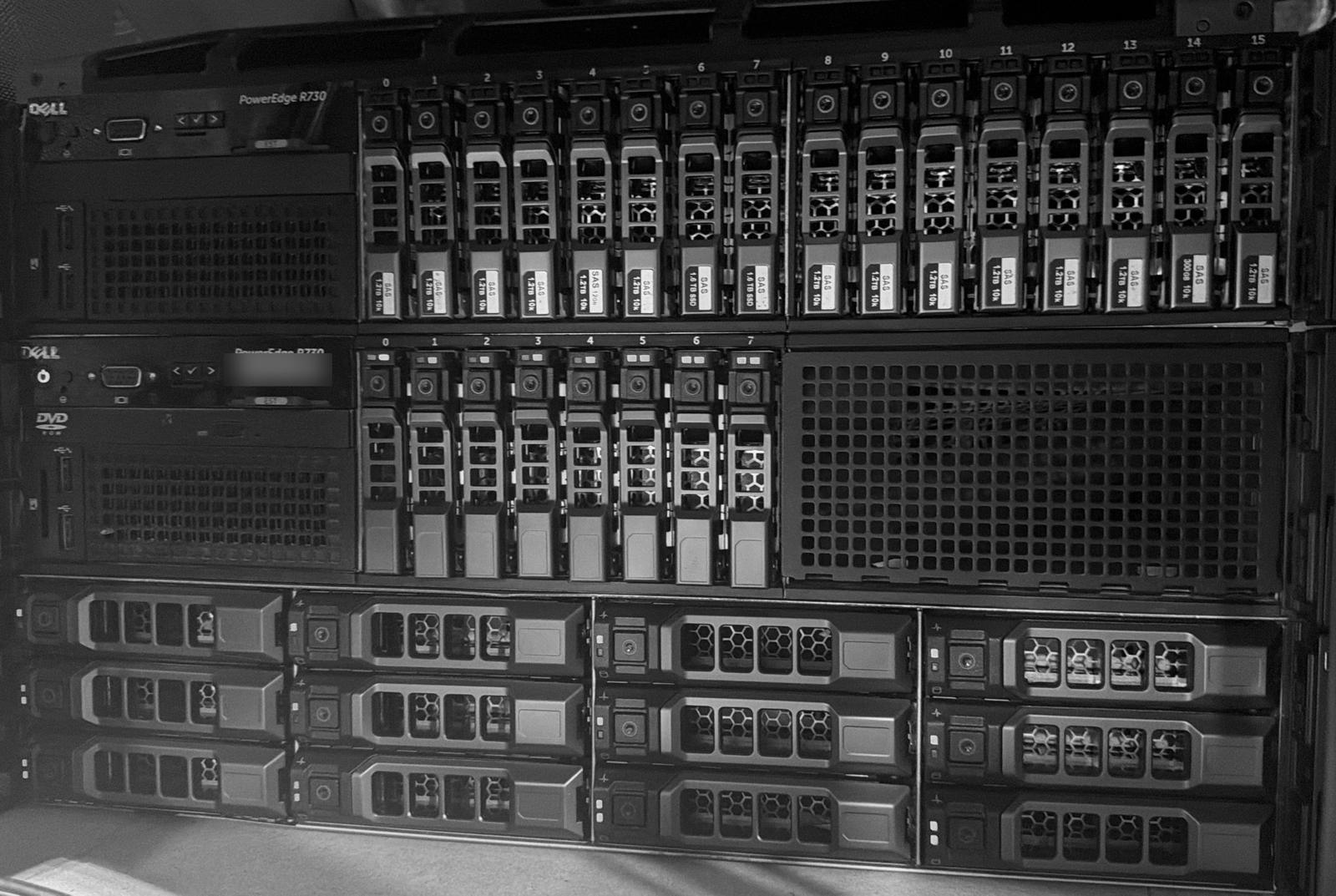
Two-NAS topology. Media archive, model library, and the dual-Xeon build host.
Orion star assignments are illustrative; firm names land at each rebuild. Avior and Aspidiske are firm: with Alsephina and Markeb they complete the False Cross. Acrux sits just outside it, the brightest star of the real Southern Cross that the False Cross gets mistaken for. Naos is in Puppis, another piece of the same ship. Constellation names are locked.
A snapshot of the repos the model pipeline has shipped, with the provenance chain that built each one. Generated from the pipeline catalog, as of 27 Oct 26.
Robinson Labs is the homelab of Stephen Robinson, a ServiceNow architect in Charlotte, NC who rents frontier intelligence and owns the rest. By day I design enterprise platforms; by night I run a local-first AI operating system on hardware I own.
The bet is simple: own your models, your memory, and your tools. Local inference, persistent memory across sessions, agentic tooling that does real work, no rented GPUs, no API key between a request and the models I serve. The interesting problems live in the wiring, not the billing.
The cluster started as a pile of PCs under my desk; today the rack lives in the garage on a lit 40-gigabit RDMA fabric. This is where I write down what I learn building it: the dead ends, the BIOS resets, the “nothing changed but everything broke” nights.
Agents, tools, chat: the spine everything else plugs into.
Singles, sealed + graded subsystem, open-a-box as an atomic transaction.
AI-assisted CRUD for a real working maker. Daily-driven.
The lab's long-term memory: decisions, facts, work items across every project.
Abliterate, prune, distill, quantize, with a provenance DB behind it.
Live GPU scraping + a multi-pass enrichment pipeline.
Early build. Agent-driven content workflow.
A large MCP tool surface plus an SDK-native agentic layer. Personal capability-build.